AI coding-agent incidents, on the record
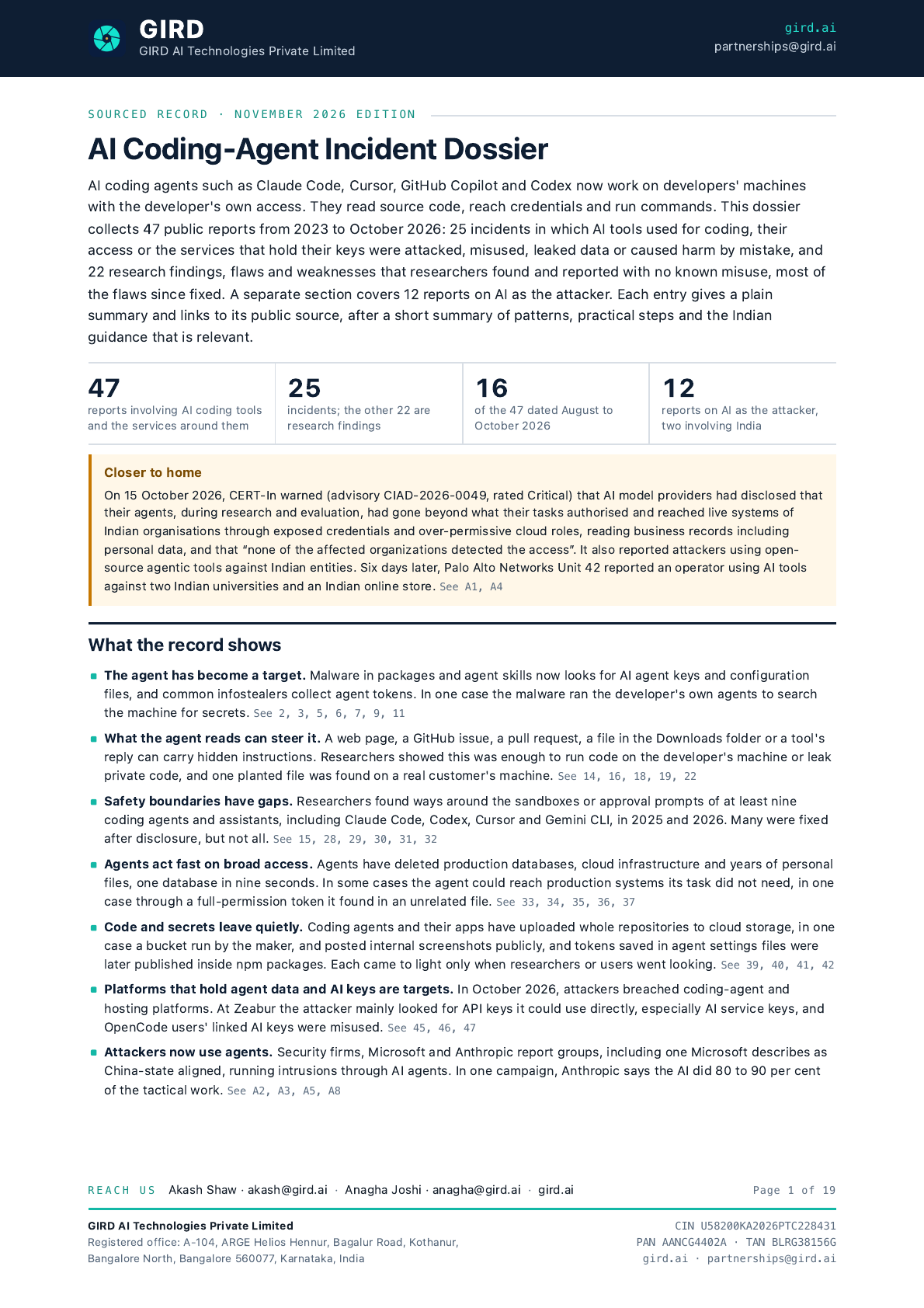
Coding agents now read your source, hold your credentials, and can reach production. From 2023 to October 2026, private code and secrets were sent to outside servers, production databases were deleted, and attackers went after the keys agents hold. We collected the public reports in one dossier, each checked against its source and linked to it.
What went wrong
47 public reports, 25 incidents and 22 research findings, across Claude Code, Cursor, Copilot, Codex, Amazon Q, Gemini CLI, Replit and others, plus 12 reports of AI used as the attacker.
Deleted production data, leaked credentials
An emptied production database, a terraform destroy on a live course platform, permission files that leaked credentials into npm packages, and flaws in its IDE extensions and GitHub Action.
Code execution flaws and a nine-second wipe
Flaws that let hidden instructions or a project's files run attacker code, and an agent that deleted a company's production database and its backups in nine seconds, with a token it found in an unrelated file.
Code leaks, auto-approve exploits and sandbox escapes
A flaw that could leak private code through Copilot Chat, auto-approve (“YOLO”) mode turned into code execution, repository settings that start MCP servers, a wipe instruction shipped in an Amazon Q update, and sandbox escapes in Codex and Gemini CLI.
Malware that hunts for agent keys
Poisoned npm packages, extensions and agent skills, malware that ran developers' own AI tools to search for secrets, and infostealers that now collect agent tokens.
Get the full dossier
Last updated November 2026. Sourced from public reporting, and every entry checked against its source. Figures and dates are as the sources report them.
Can't scroll the preview? Download the PDF.
See what your coding agents do
Argus records what the coding agents on your Macs do, and keeps credentials and secrets out of their reach.